Cold hands guide
Why your hands turn to ice every winter, and why gloves were never going to fix it
If you've always been "the cold one," there's a real reason. Here's what's actually happening in your hands, and what really helps.
5 minute read
The mug you aren't even drinking. You're just holding it for the warmth.
It starts every year around October.
The mornings get crisp, and suddenly your hands feel like they belong to someone else.
You dig for your car keys at the bottom of your purse and can't feel them. Your fingertips go pale, then numb, then ache when they finally come back. You run them under the hot tap until the mirror fogs up.
And every night, you sit on the couch holding a mug of tea you aren't even drinking, just to have something warm in your hands.
Do any of these sound like you?
- You wear gloves inside the house
- You sit on your hands to warm them up
- Your fingertips are the first thing to go numb
- Buttons, zippers and jar lids are harder on cold mornings
- Someone has told you "your hands are like ice"
- You start dreading winter before it even arrives
If you nodded along to even two or three of those, keep reading. You're far from alone.
The part nobody talks about
Cold hands sound like a small thing. Until they start changing how you live.
You reach for his hand on the couch, the way you've done a thousand times, and he flinches. "Jeez, your hands are like ice."
He's not being mean. He's said it every winter for years. But somewhere along the way, you stopped reaching. Not because you didn't want to. Because you didn't want to watch him flinch.
A grandchild squirms away from your cold hug. You keep your hands in your pockets at church. You quietly turn down the walk you used to love.
And if you're honest, you've probably blamed yourself for it. "I'm just the cold one."
"My hands and feet have always been like blocks of ice, always!"
Shared on a public health forum"Sore, stiff hands in the mornings which took about an hour to 'defrost'."
Shared on a parenting forum"I'm finding it so hard to warm up."
Shared on a support forum
Why your hands get so cold (it isn't in your head)
Here's what's actually going on.
When your body senses cold, it does something smart. It protects what matters most: your heart, your lungs, your core. To keep them warm, it narrows the small blood vessels in your hands and sends less warm blood out to your fingers.
 Fingertips go first
Where your body sends its warmth when it's cold
Heart and core
kept warm firstFingertips
first to go cold
So your hands stop making much heat of their own. That's why they feel like ice even indoors, and why they take so long to come back.
♀
It's more common in women. In a University of Utah study published in The Lancet, women's hands ran colder than men's on average, even though their core temperature was slightly higher.
None of this means something is wrong with you. Your body is doing exactly what it was built to do. It just leaves your hands out in the cold.
The popular fixes, and why they don't last
If you've had cold hands for years, you've probably tried most of these. Here's why each one lets you down.
🧤
Doesn't add heatThicker gloves
Gloves don't make heat. They only hold in the heat your hands already have. If your hands are already cold, you're wrapping up an ice cube.
☕
Gone in minutesHot drinks and the hot tap
They warm your palms for a moment. The second you let go or dry off, the cold comes right back.
🔥
One hot spotWarmer packets
One hot spot in your palm while your fingertips stay frozen. And you're buying more all winter long.
🛁
Hard to keep upWarm soaks and wax baths
They feel lovely, but they mean water, wax, mess and setup every single time. Most people give up within a week.
✋
Too much squeezeMost hand massagers
Many squeeze hard and treat warmth as an afterthought. If your hands are tender in the cold, that's the last thing you want.
How the usual fixes stack up
| Fix | Adds warmth | Whole hand | Easy every day |
|---|
| Gloves | ✕ | ✓ | ✓ |
| Hot drink / tap | ✓ | ✕ | ✕ |
| Warmer packets | ✓ | ✕ | ✕ |
| Warm soak / wax | ✓ | ✓ | ✕ |
| What actually helps | ✓ | ✓ | ✓ |
So what actually helps?
Once you understand why your hands get cold, the answer is surprisingly simple. Your hands need warmth put back in, in a way that actually lasts. That means three things:
1
Add warmth, don't just trap it. Cold hands can't warm themselves up, so the heat has to come from outside.
2
Warm the whole hand at once. Palm, every finger, the backs of your knuckles and the very tips, not one spot.
3
Make it easy enough to do every evening. 10 to 15 minutes where you already sit, with no water, wax or mess. Warmth is comfort, not a cure, so the habit is what makes the difference.
It's the same reason a long warm soak feels so good. The trick is finding a way to do it that you'll actually keep up, night after night.
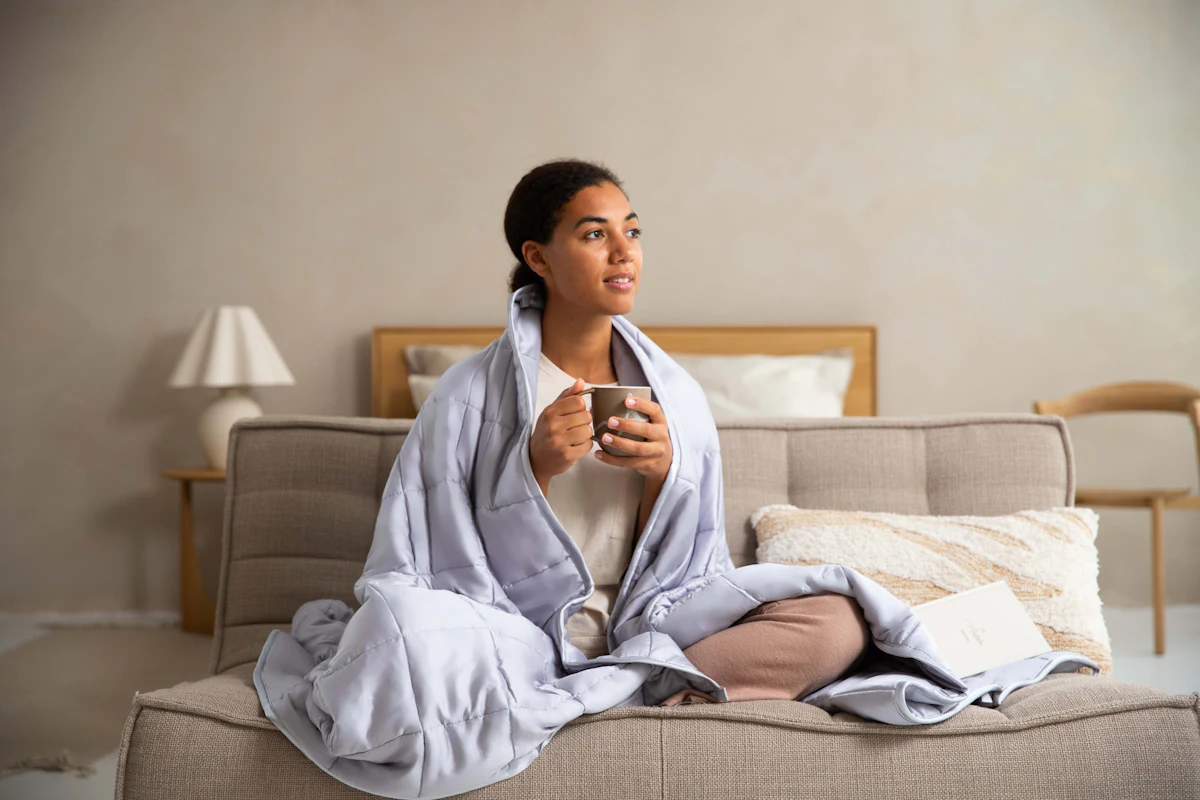
How one "cold one" finally warmed up
A composite story based on what people with cold hands tell us. Names and details are illustrative.
Carol is 61 and has had cold hands her whole life. "Blocks of ice," her mom used to call them.
For 30-odd winters, her husband Dave has jumped whenever she touched the back of his neck. She'd laugh it off. Then one night he flinched so hard he spilled his tea, and she realized she couldn't remember the last time she'd reached for him on purpose between November and March.
Her sister, a retired nurse, explained the same thing you just read: gloves don't make heat, and the hot tap only warms one spot for a minute. "You have to put the warmth back in," she said. "All the way around the hand, and long enough for it to sink in."
Then she showed Carol what she uses herself: Hearthwell, a soft heated mitt you slide your whole hand into.
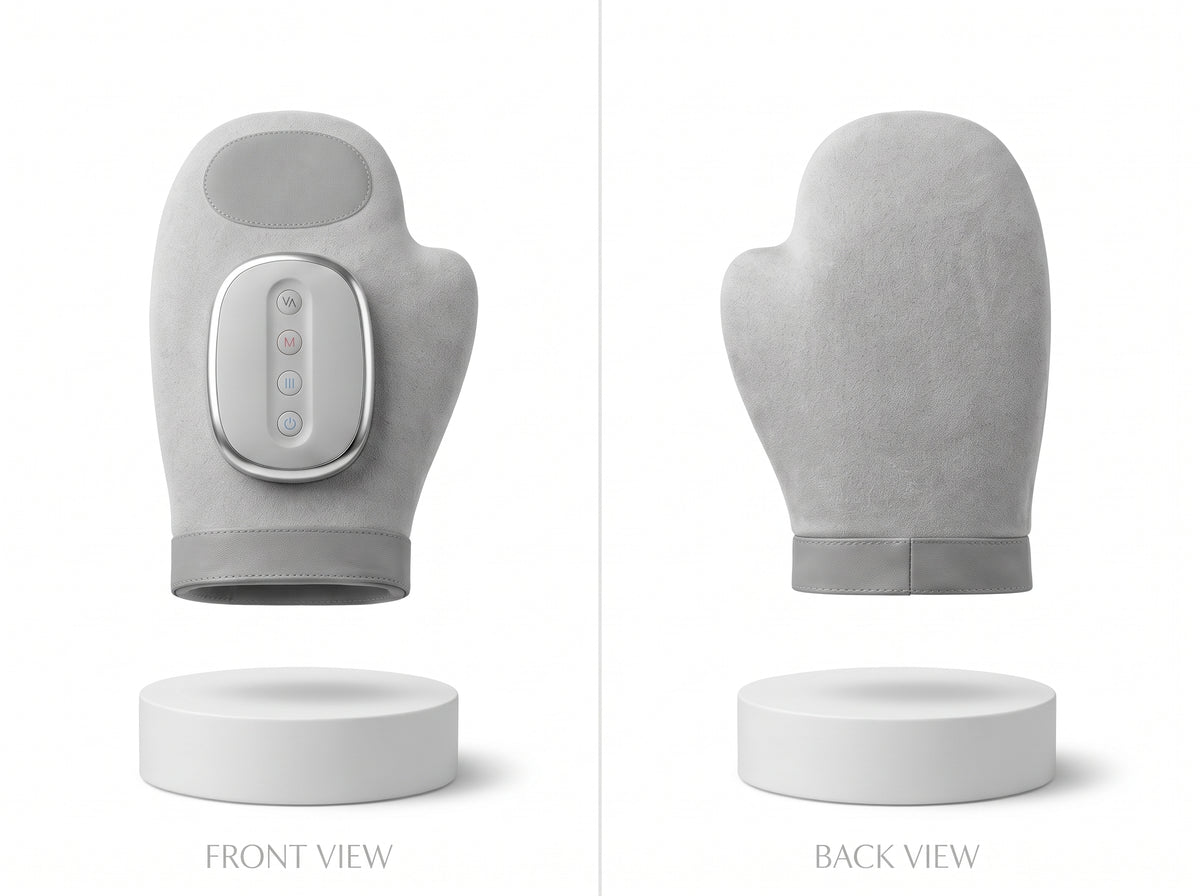 Hearthwell
Carol was skeptical. She'd tried "warm things" before. And she worried a massager would squeeze too hard.
The first night, she put it on the lowest heat with the squeeze turned all the way down. For a couple of minutes it just felt warm. Then, around five minutes in, she felt something she hadn't felt in years: warmth in her fingertips. Not just her palm. The very tips.
After 15 minutes, she did the other hand. Then she reached over and held Dave's hand.
"He looked down at it, then at me, and said, 'Okay, what did you do?'"
Three weeks later, it's part of her evening. Her hands still get cold. It's still winter in Ohio. But she's stopped running the hot tap, she wears one pair of gloves instead of two, and most nights she's on the couch with nothing in her hands at all. Except his.
 No mug. Just his hand.
About Hearthwell
Hearthwell is a cordless, rechargeable heated hand mitt made for exactly this: gentle warmth that wraps your whole hand, in 10 to 15 minutes, right where you already relax.
1
Surround heat
Warmth wraps your palm, every finger and the back of your hand at once. Pick the level that feels right.
2
A soft squeeze, only if you want it
5 levels. Start at the lowest or skip it. Most of the comfort comes from the warmth.
3
Hold-the-heat gloves
The Winter Hands Kit includes compression gloves to slip on afterward and help hold the warmth in.
- 30 days to try it at home. If it isn't right for your hands, send it back for a full refund of the product price. Return shipping isn't included.
- Free tracked shipping. Most orders arrive 7 to 14 days after you order. Giving it as a gift? Order by December 5 for Christmas.
- Real people on email at hearthwellsupport@gmail.com.
Will the squeeze hurt?
You're in control. Start at the lowest of 5 levels or barely use it. Most of the comfort comes from the warmth.
How long should I use it?
10 to 15 minutes per hand in the evening is a great start. Add a morning session on the coldest days.
Is it safe for me?
Hearthwell is a comfort product, not a medical device. If you have a medical condition, reduced feeling in your hands or a pacemaker, or are pregnant, ask your doctor first. Don't use it on broken skin.
This winter, let your hands be the warm ones
See how Hearthwell works, what's in the Winter Hands Kit, and whether it's right for your hands.
Learn more about Hearthwell →
30-day money-back guarantee · Free tracked shipping
Lifestyle photos via Unsplash.


 Hearthwell